Architecture Beyond the Human:
Designing for a Living World with ecoLogicStudio
In conversation with Natsai Chieza, Poletto explores a vision of “planetary animality”—a world in which human intention coexists with microbial intelligence. ecoLogicStudio’s work makes this future tangible: from desktop purifiers that transform polluted air into biomass, to playground structures that double as living filters, their projects reposition architecture as an interface for multispecies collaboration. In this framework, creative agency is distributed, and beauty is measured not by aesthetics alone but by a system’s capacity to sustain life. In the overlooked flows and hidden metabolisms of the city, ecoLogicStudio sees an opportunity for biodesign to confront our repressed biological orientations and channel them into spaces that are truly habitable, alive, and life-sustaining.
"For us, this way of inquiring into the living world has been very much associated with the idea of creativity and intelligence as something that is not exclusive to humans."
THE LIVING PLAN
Natsai Chieza: For our readers, can you give us an overview of your practice and tell us how ecoLogicStudio came into being?
Marco Poletto: First of all, thank you for inviting us to this conversation. I think it’s very important to make as many connections as possible with different actors in this field, because, of course, the transformation we are looking at is systemic.
We come more so from the cultural world, than from the technological. Architecture and urban design have always been very much driven by experimenting with the new opportunities that technology has offered designers. From the digital revolution in modelling, conceiving, prototyping, producing, and with the advent of biotechnology, and more recently, even AI has facilitated these transitions. We are always looking for ways of improving our ability to interface with the living world. To transform design and building into something closer to gardening and growing as a kind of activity. That’s really a kind of cultural and methodological transition, together with the technological one. It’s also a question of shifting perspective in terms of where we stand as creative humans in relation to the creativity we can find in the living world, in many shapes and forms.
For us, this way of inquiring into the living world has been very much associated with the idea of creativity and intelligence as something that is not exclusive to humans. And we see AI and other tools as an opportunity to expand what it means to be creative, and who can be creative.
ecoLogicStudio started about 20 years ago as a design practice, always closely connected to teaching and research—initially at the Architectural Association School of Architecture here in London, a kind of atelier or ‘hands-on’ design school, more than a place of traditional academia. We spent our first 10 years in beautiful experimentation with our practice, but also with our students. Now, several years later, the practice is more and more connected with the academic research through The Bartlett School of Architecture at University College London and the University of Innsbruck, where Claudia is a Professor of Landscape Architecture and Head of Urban Design. This represents not only a deeper commitment to research and innovation, but also to working within a broader community of students, researchers, and collaborators—a polycephalum as Claudia likes to say—a kind of multi-headed effort, which is how we like to think about creativity.
Natsai Chieza: Would you characterise yourselves as coming, therefore, from the tradition of architecture?
Marco Poletto: Well, we trained in Torino, Italy, as engineers, and then completed our studies here in London at the Architectural Association—which was not really traditional architecture, but rather a much more artistic practice. Our methodology is very much about negotiating these two sensibilities: a technology-driven education on one side, and on the other, a sensibility rooted in the cultural appreciation of where innovation and creativity can take us—together with a profound interest in the natural sciences, biology, and biotechnologies. Sometimes it’s quite difficult to define, but that’s the terrain we ended up finding ourselves in.
We are often called architects, sometimes artists, sometimes innovators, sometimes bio-digital designers—and all of these definitions are fine with me. I could also be considered an engineer. At the end of the day, what matters is that we have a clear design method and philosophy that we are pursuing. Some of our projects are more artistic or speculative, while others are more driven by design innovation—more engineered, more actualised. That’s because we like to engage with clients and opportunities in a very open way; we never start with a preconceived idea of what we are or where we will end up. What we have developed over these years is, perhaps, our own unique way of being designers.
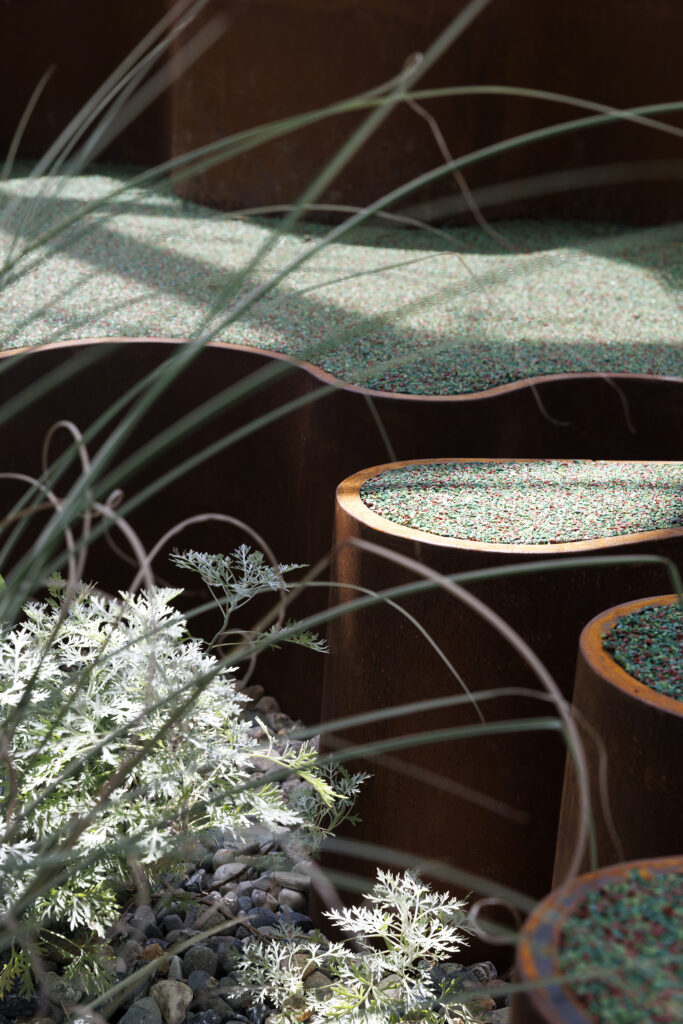
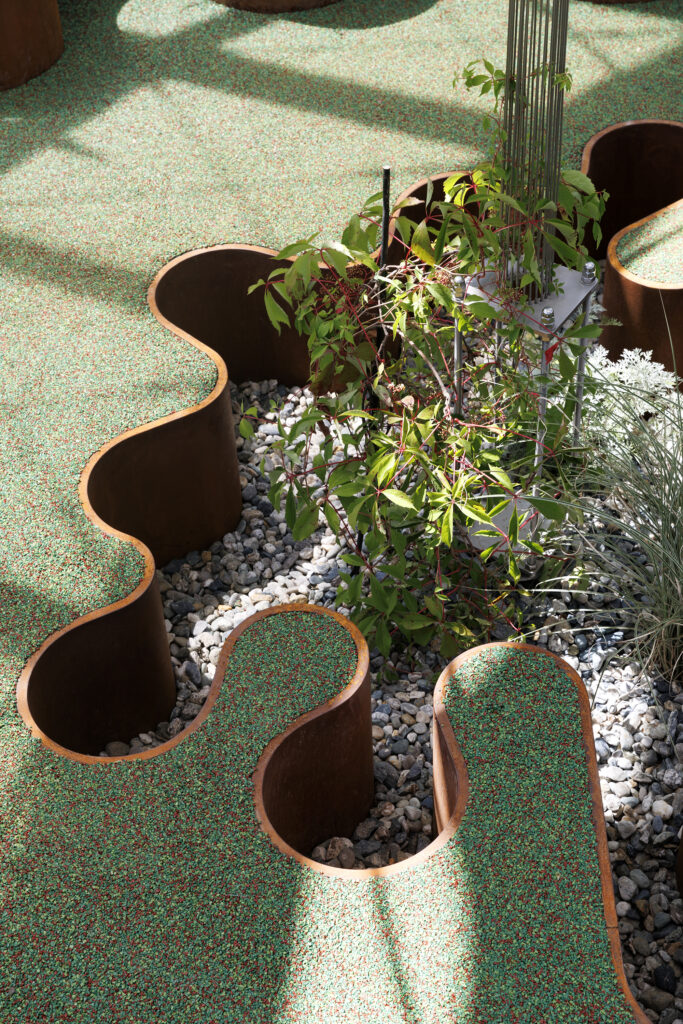
"All of a sudden, you are in a dimensional space, because materials are no longer typologically described as timber, steel, or whatever. Instead, they are active, they transform, they morph, they degrade, and they can be grown. And so to a certain extent, everything changes and turns into a component of a system that has the capabilities of being generative and creative."
Natsai Chieza: I’m fascinated by your retelling, and I sense we share many commonalities in our practices—not least our UCL connection. That was where I first began working with engineering biology, not just as a discipline but as a conceptual framework for how we shape the world around us. What struck me then, and still does, is the fluidity of how such projects emerge—often circumstantial, contingent, mirroring the unpredictability of life itself.
But maybe we can talk about biodesign more broadly? Since this is the term that is trying to hold all of these conditions together in some meaningful way. I think a lot of what we’re thinking about right now is convergence, because we have the actual tools, it’s no longer a theoretical paradigm, it’s happening. So perhaps you could, by way of sharing more of your project space, spend a bit of time talking to us about this notion of what is biodesign? And in the age of AI, how does that manifest in your project space?
Marco Poletto: For me, first and foremost, it’s an opportunity to question the role of intelligence and creativity, and to ask where we locate that kind of agency. Especially in architecture, but also in many design practices, there has been a long-standing tendency to assume that humans have a special role as planners in complex problem-solving. In urban design, for example, the idea persists that the planner is the one who understands the city better than anyone else, and can therefore solve it and find the solution for a better future. For us, it became quite clear that this illusion had to be challenged.
And so that’s where we began to understand biodesign, not just really as a trend or style of architecture—although you could say that a certain kind of style has emerged as well—but it is really a way of discussing architecture and urban design in an age where creative agency is distributed, and can no longer be identified with a single individual or even a single practice.
So when we are dealing with the complexity of cities—even the complexity of a building, a piece of public realm, or a landscape—we know we are working with a system that has its own autonomy to a certain extent, and that is populated by a myriad of other systems with their own capacity to influence the outcome of any project or creative endeavour. When you start looking at the reality systemically, all of a sudden, the kind of traditional tools and techniques of design, materials and production are obsolete or insufficient.
And that’s where we began our work. For a long time, we were deeply engaged in the realm of drawing, searching for ways to represent spaces that were permeable and capable of accommodating the fluctuations and changes that characterise the environments we live in today. Even something as simple as drawing a line—which traditionally signifies a wall, a border, or a boundary—had to be reconsidered. We needed to invent new ways of drawing lines or assigning meaning. A line could become more convoluted, transform into a field of points or densities, or evolve into a collection of cells. Then it became about how these entities and cells relate to one another, how they attract or repel each other, and so on.
This was 20 years ago, but we were beginning to question the foundations of how you start to even draw a plan, right? That plan then becomes three-dimensional, it becomes time-driven, it becomes alive. All of a sudden, you are in a dimensional space, because materials are no longer typologically described as timber, steel, or whatever. Instead, they are active, they transform, they morph, they degrade, and they can be grown. And so to a certain extent, everything changes and turns into a component of a system that has the capabilities of being generative and creative.
It’s no longer a case of shaping material or giving it a three-dimensional form. It’s a question of breeding a pattern or growing a certain morphology. We’re talking about morphogenesis. Step-by-step, you begin to redefine and revisit most of the accepted concepts of the discipline.
There’s a lot of work to do in terms of the industry itself being reimagined. You could say that there is a certain segment of the building industry that, in my opinion today, has got nothing to do with architecture. It’s acting autonomously as a kind of construction machine, independent from the development of architecture as a discipline, and maybe that’s a problem—architecture itself is already in a new space. I hope that the building industry takes note.
CONTAMINATION IN PRACTICE
Natsai Chieza: That’s the fascinating tension: a discipline can be moving in a completely different direction from the capabilities on the ground, yet it isn’t likely, at least for now, to retreat from those new frontiers simply because practice has not caught up. So the question becomes—what breaks that impasse?
Given the different scales at which you’re engaging these questions—from the human scale and a product perspective, to the architectural and even ecological scale of landscapes—what enables the leap from demonstrating technical efficacy to actually transforming the built environment?
Marco Poletto: It’s an interesting question, as we have collaborated with companies from many industries, not just construction but also pharmaceutical, automotive, and others. They are interested in our work because they see a reflection of what they are trying to do, and view collaboration with us as a way to induce change and accelerate their own operations. Although we’re not directly changing what they do or how they do it, this kind of work is predominantly a form of contamination. I don’t think architecture should be concerned only with the building industry; it should address what we call the entire urban sphere, all the industries that, in one way or another, affect the way we produce and consume goods of any kind. Any industry that recognises the value of innovation, and the connection between space, infrastructure, materiality, and operations, is relevant to us.
There is a sense that biodesigners can contribute, whether the work is called biodesign, biophilic, biotechnological, biomedical, or any of its many other declinations. Where architecture has traditionally been confined to industrial design, product design, interior design, architectural design, urban design, landscape architecture, and so on, today it also extends to biodesign, biomimetic and biophilic engineering, biotechnological, biodigital, bio-AI, and more. When the field matures, it bifurcates and redefines anything and everything.
"When you think about air pollution architecturally, you begin to understand its spatial and microclimatic dimensions. You start to recognise that air pollution is not just an average number across the city; you can actually map and measure it, and it can change dramatically within just five metres."
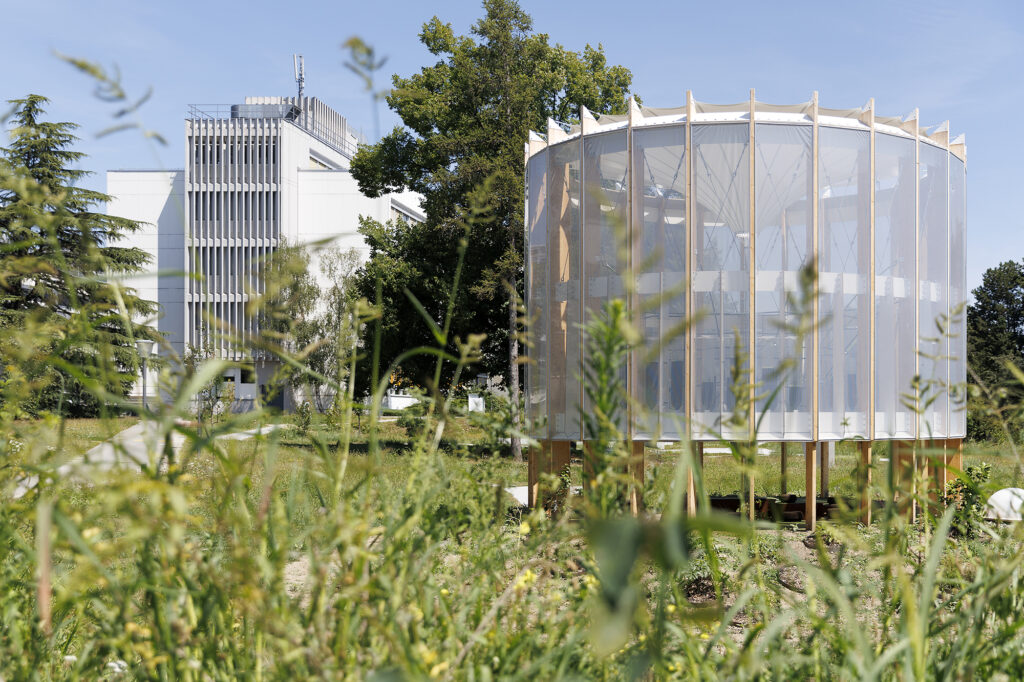
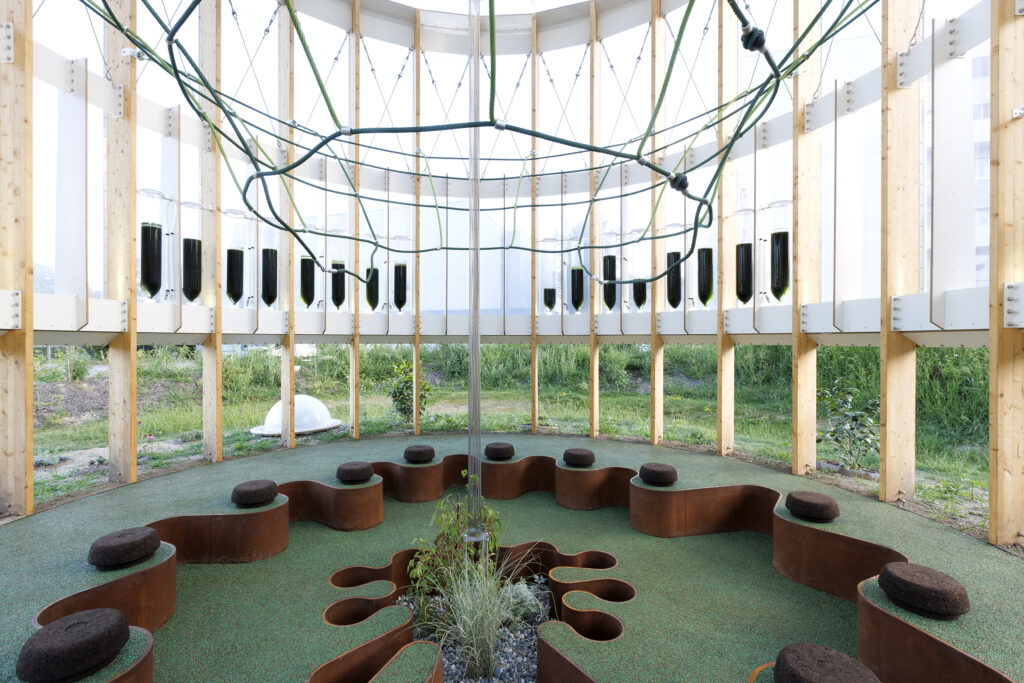
Natsai Chieza: You have a project called the AirBubble Restorative Space [t. - 1] , and the tagline is ‘a biotech garden for physical and mental health care’. What’s a biotech garden?
Marco Poletto: This and other projects have been pivotal for us because they marked the moment we transitioned from artistic or speculative projects at a controlled scale to projects that could be defined architecturally, as they reached the level of engineering and actualisation where they could actually be built.
The respiratory health team at GlaxoSmithKline wanted to make visible the different elements of air quality and air pollution. They were interested in an approach that went beyond highlighting the damaging effects of poor air, aiming instead to create awareness and empower people to take action.
When you think about air pollution architecturally, you begin to understand its spatial and microclimatic dimensions. You start to recognise that air pollution is not just an average number across the city; you can actually map and measure it, and it can change dramatically within just five metres. For example, when you’re at the junction of a street and then move away, the concentration can vary enormously.
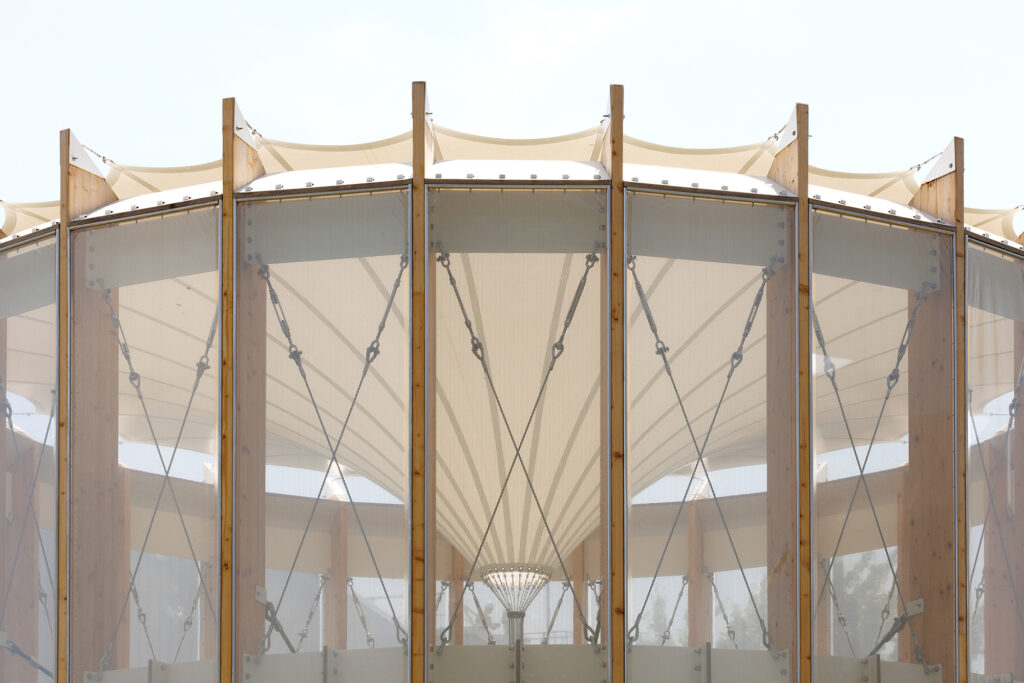
The way the AirBubble works is a perfect demonstration of how technology and architecture collaborate, because the system’s performance in mitigating air pollution only works thanks to the architecture itself. The algae cannot purify the air of an entire city in one go. The integrated system creates a microclimate, a controlled space that is enclosed enough to form a bubble of clean air—or at least an environment where pollutant concentrations are very low. It’s not 100% clean, because we are not in a lab, but it is low enough to be safe and comfortable to breathe. At the same time, you’re not sealed inside. You’re in an environment with light and breeze; you can still move in and out, and experience the sense of being outdoors. You can engage, play, and interact with it.
The algae bubbling includes a sound element, which is amplified to create a completely immersive experience. This is what our bodies and minds respond to, because, after all, we are still animals reacting to the physicality and multidimensionality of these spaces. That is why architecture remains so powerful, even in the digital age.
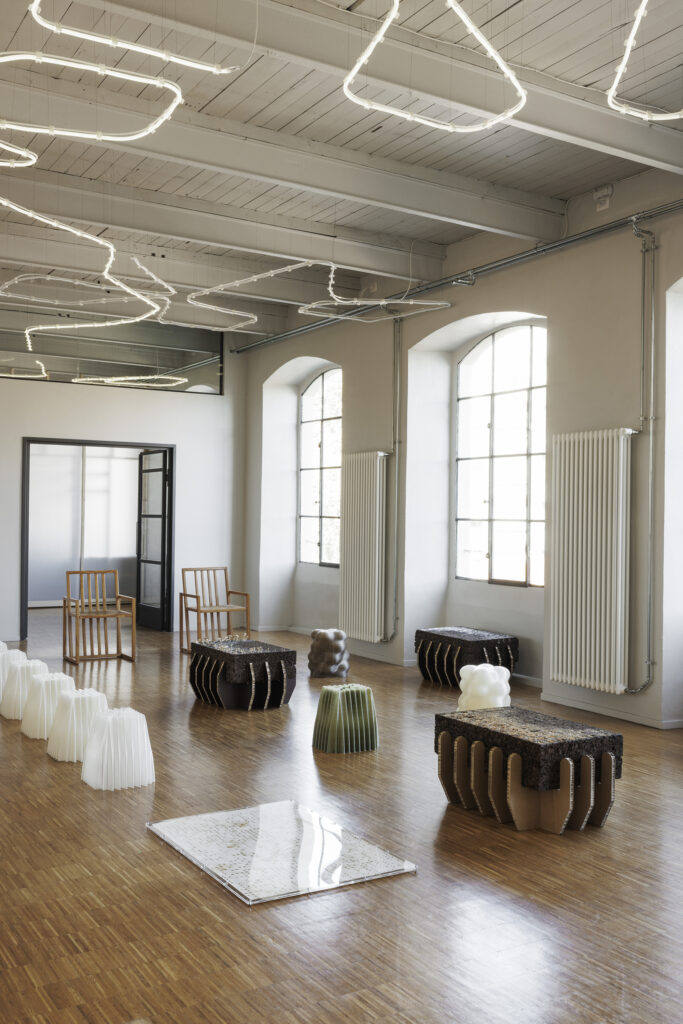
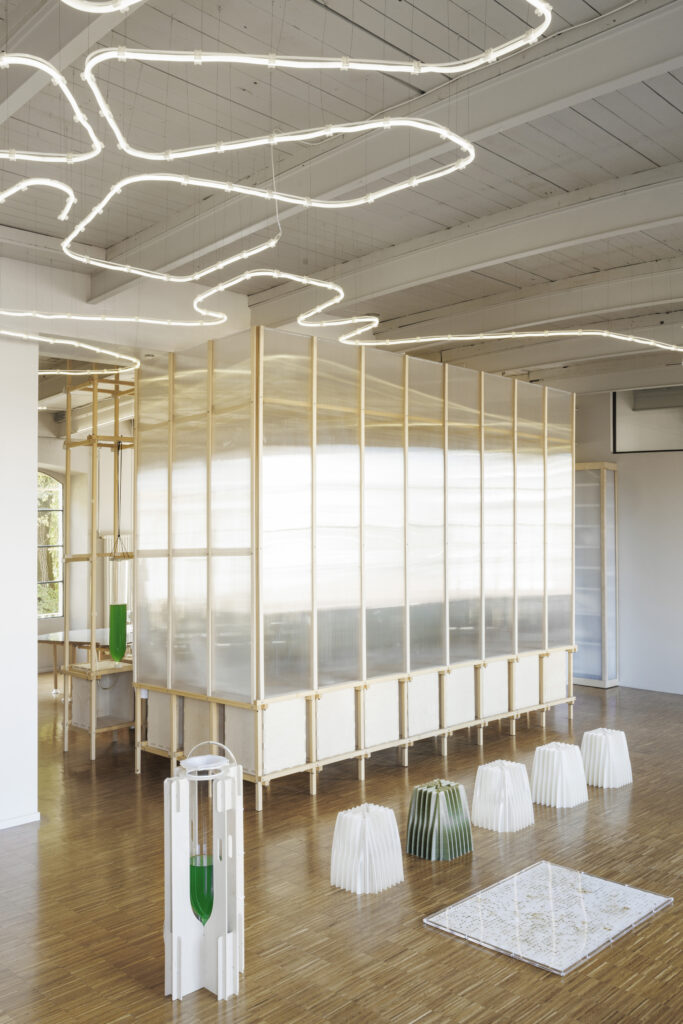
The challenge is always to bring people to visit these spaces in person. The recently inaugurated Design Apothecary [t. - 2] in Torino is what we think of as part showroom, part laboratory, part domestic environment—somewhere we can test and demonstrate this approach to design in day-to-day life. Over the next few years, we plan to use it to allow as many people as possible to feel and experience the effects of biodesign, and perhaps to run experiments together: the atelier and the lab combined.
Natsai Chieza: Is the Design Apothecary open to the public?
Marco Poletto: It’s not a public space as such, though we welcome colleagues, students, and visitors by appointment. It is very much intended and designed to be a space for engaging, and so we have already done a series of workshops with students, we have built a new exhibition that will be shown in Milan and now for the triennale, we’re collaborating with other organisations including a pop-up event in Bologna, and we’ll be part of the open house in Torino—so for that weekend, everybody will be able to to visit. We are trying to multiply the situations in which this approach becomes the present and not just a fantasy for the future.
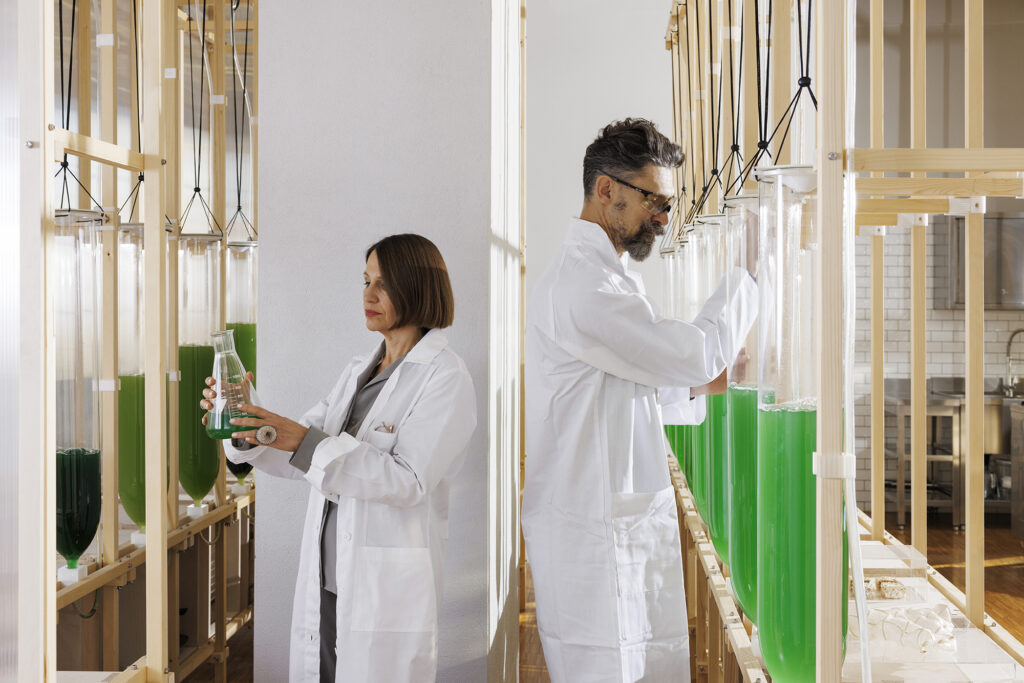
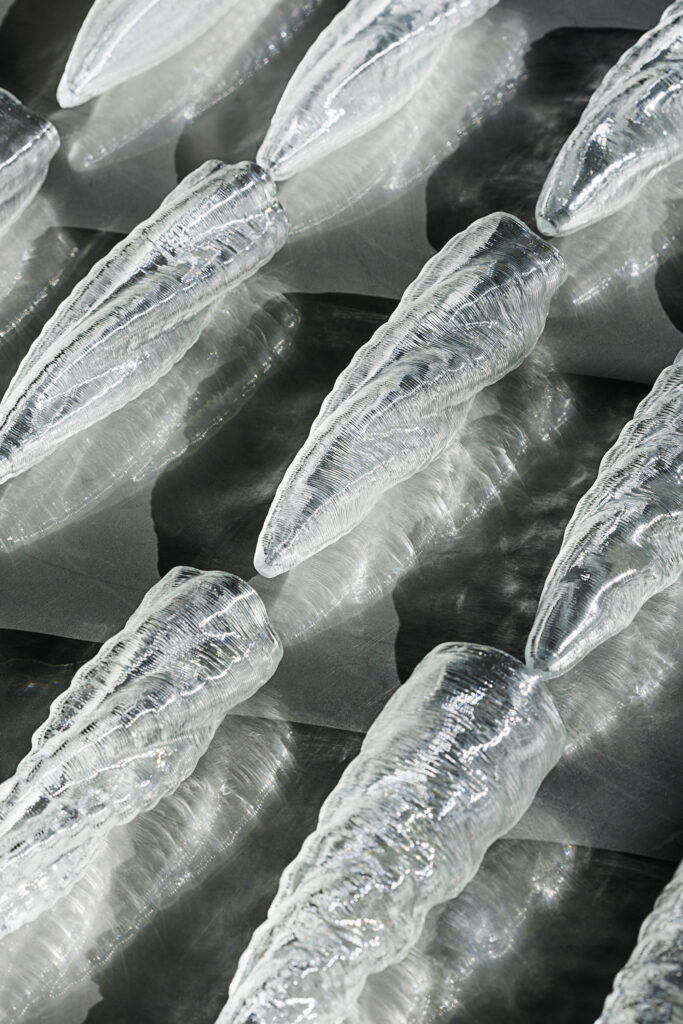
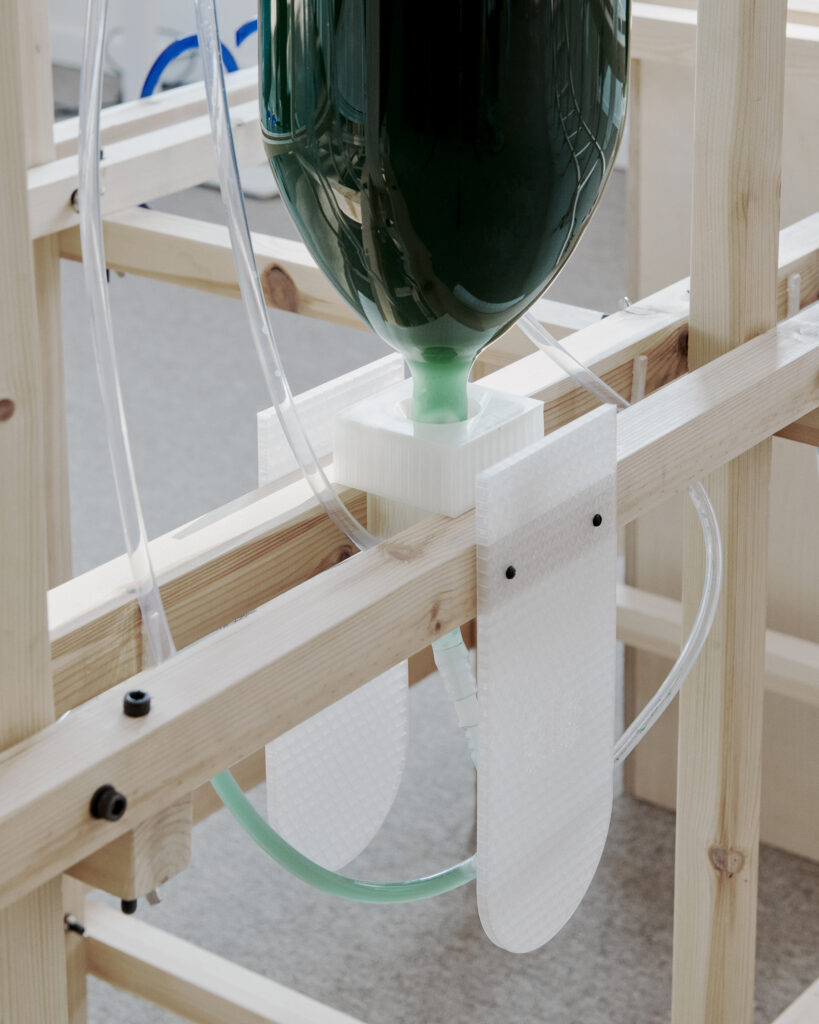
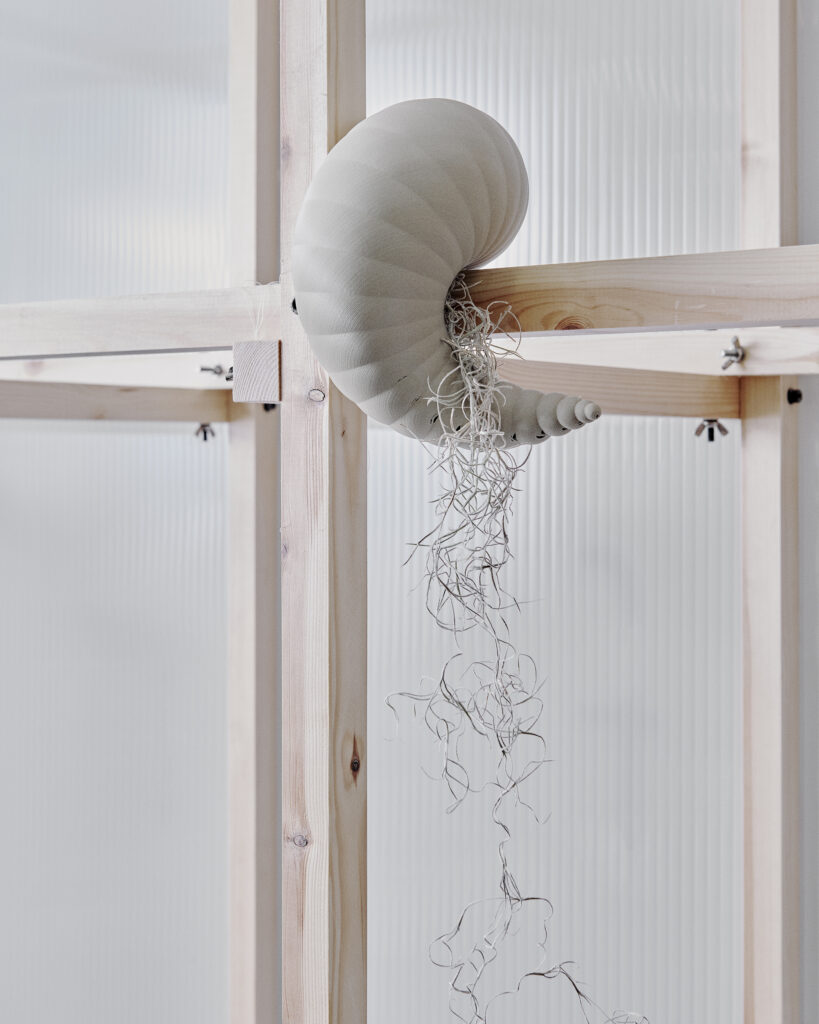
I think that it’s very important that people can experience it—and we like to call it gardening more than maintenance—because in a way it’s not really a machine, it’s a living system. We’re developing systems, like the AIReactors, [t. - 3] to be pretty resilient and robust, where maintenance and gardening are quite simple. It can be just about topping up the liquid, or maybe just checking the colour, or measuring the pH: simple operations which, if you do them every day, they become part of a practice; a new way of being and inhabiting the space.
There are client scenarios in which we are able to suggest and encourage that interaction would be beneficial and would be interesting and useful; there are also scenarios where we are specifically asked to make the system as autonomous as possible, to reduce intervention as much as possible. I think the ability to influence the way people perceive nature around them is a very powerful way to create change.
"What humans see as waste or pollution becomes a nutrient or feeding ingredient for algae, allowing us to look at the city in a completely different way."
ALGAE LOGIC
Natsai Chieza: That’s something that you touched on earlier, that I wanted to come back to. The specificity of knowledge and ways of being that arises from that particular organism—algae—that is different to other liquid cultures. Even the language around gardening is incredibly evocative. I’m very curious about the kinds of mental models you’ve had to develop because you’re working with algae. I’m also alluding to the architectural rules around drawing you mentioned at the beginning of our conversation, and the fact that you have to change them because they mean something different. What has algae made alive to you? What kinds of principles are so fundamental to working with algae that are difficult to translate to any other system?
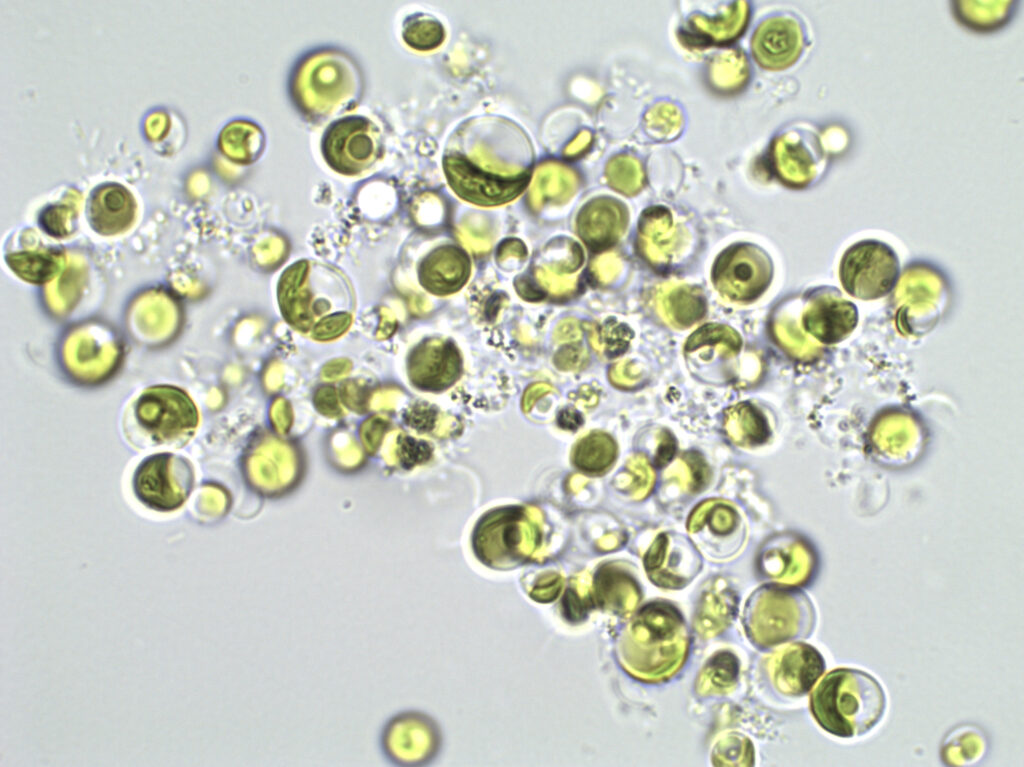
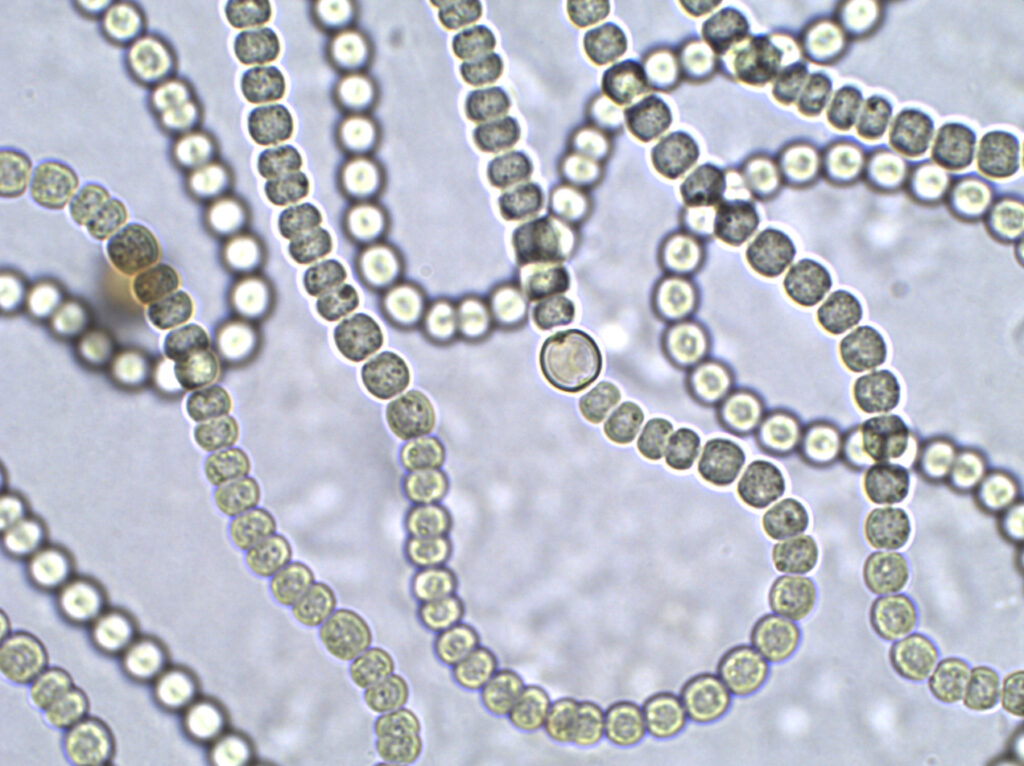
Marco Poletto: The more we worked with algae, the more we realised that they exist in a plethora of shapes and forms. Although they are mostly unicellular organisms, their cells take different forms, and collectively they can cluster and create distinct organisational models that allow them to survive in environments that are almost impossible for most other organisms.
For that reason, you find them in glaciers, inside volcanoes, and in the most extreme environments, including cities and highly polluted water bodies.
That’s when we began to realise that these kinds of ‘biopixels’ can acquire a multiplicity of qualities that relate to unique site conditions. In specific urban scenarios, they could become real building blocks of a biocity, able to thrive in that particular context.
Ultimately, they became a way of reading reality from a completely different perspective. What might once have been considered a polluted environment could suddenly be seen as a test bed for these cultures to thrive and grow into something entirely new. What humans see as waste or pollution becomes a nutrient or feeding ingredient for these organisms, allowing us to look at the city in a completely different way.
Even air pollution, all of a sudden, became this kind of invisible breeding ground, which suggested that we could address issues like air pollution or land contamination from an entirely new point of view—a creative, generative perspective that could lead to a new kind of architecture.
For me, that marks a unique shift in our journey: from architecture to computation, to the abstraction of algorithms, and then back into the biology and biotechnology of algae, and finally full circle into architecture from a completely different perspective. This approach allows for a whole new definition of architecture to emerge, where algae functions both as a thinking model and as actual biomass.
"There is an idea that aesthetics are a measure of ecological intelligence—that it helps us perceive when something is made right, with heart, passion, and value. Even if the aesthetic is challenging, and may not align with traditional or classical notions of beauty, a trained eye can perceive its own kind of beauty, because you can tell that whoever created it put their whole self into it."
AESTHETICS AS EVIDENCE
Natsai Chieza: I love that. My last question is about beauty. For a discipline so deeply concerned with aesthetics, yet working within the perceived limitations of living systems as a medium, how do you understand beauty—and how urgent is it to bridge this in order to engage as many stakeholders as possible?
Marco Poletto: It’s a very complex topic, and perhaps one of the most controversial aspects. I’m British-Italian, both in nationality and in experience, having spent exactly half of my life in one country and half in the other. So I can’t really say which I identify with most; probably I’m a kind of blurred combination of both. I’ve always felt that, as Italians, we have a particular appreciation for the importance of beauty or aesthetics—not just in terms of elegance or style, but as a fundamental value in judging the quality of anything, from an artwork or an artefact to architecture or a city.
There is an idea that aesthetics are a measure of ecological intelligence—that it helps us perceive when something is made right, with heart, passion, and value. Even if the aesthetic is challenging, and may not align with traditional or classical notions of beauty, a trained eye can perceive its own kind of beauty, because you can tell that whoever created it put their whole self into it.
It’s often something I really struggle to communicate to my British colleagues. In Britain, there always seems to be a strange dichotomy: if something is ecologically sound or sustainable, it cannot be beautiful; and if it is beautiful, it cannot be sustainable.
Even now, I think this remains one of the least understood aspects of our work. When people see some of our most artistic or aesthetically challenging projects, they often doubt whether they are truly ecological.
I believe we should train ourselves to appreciate beauty as a valuable measure of ecological intelligence. We should learn to read the patterns that tell us something is good, rather than relying solely on numbers. The more we train ourselves to recognise beauty in products with this quality, the concept of beauty itself evolves. It becomes a question of redefining our understanding of beauty in ecological terms—a perspective that applies to everything, not just human-made objects.
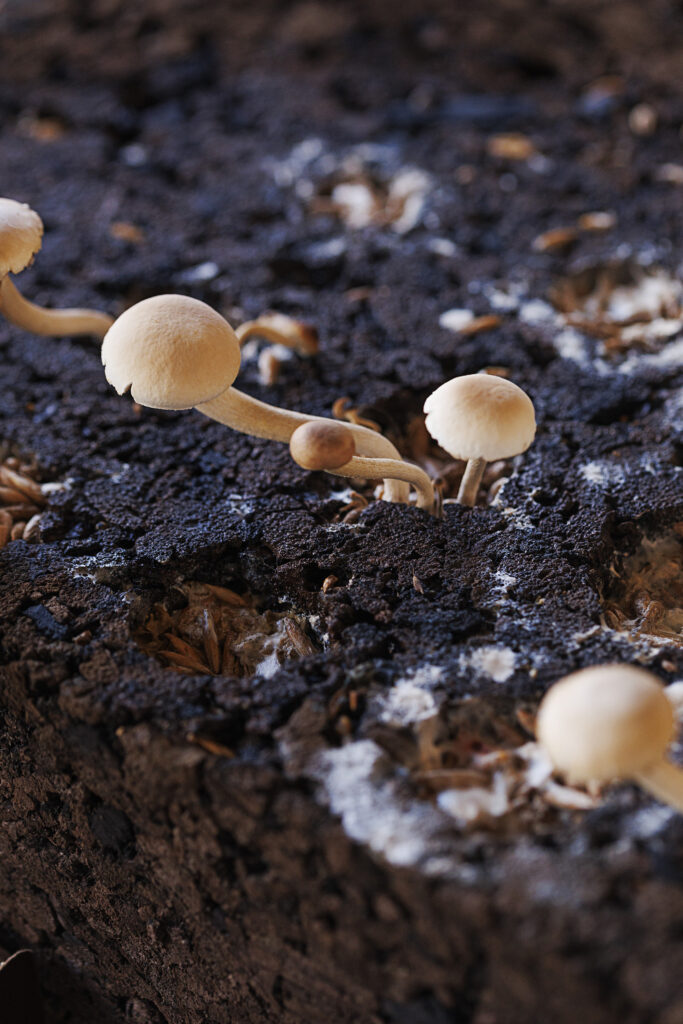
When you work at the microscopic scale, you begin to recognise beauty in things that might normally be perceived as disgusting. The human eye can see organisms that exist in the soil or in a contaminated landfill, and yet when you look closer, you discover an incredible potential for life and creativity. You see this by working with slime molds, mycelia, and all these creatures that live in the dark, in the soil. They may not be beautiful according to conventional standards of natural beauty, but they are incredibly powerful.
Again, this idea can be extended to urban design. We want to make cities greener, but what about the regions where we dispose of our waste—wastewater treatment plants, landfills, and so on? The question of beauty needs to include these areas of the city; otherwise, we risk perpetuating the illusion of green cities and green architecture. We need to incorporate organisms, urban systems, and architectural systems that are crucial to our survival, yet are often hidden and excluded from any consideration of beauty.
It’s funny because the Victorians regarded their wastewater treatment plants as cathedrals—they built them as beautiful, ornate structures. Our sense of beauty and aesthetic values must evolve accordingly; it is an epochal transition.
Natsai Chieza: I’m struck by the Victorian example of the cathedrals. In economic terms, the Victorians lived through the industrial period with rapidly expanding national wealth but without a welfare state. Surplus capital, rather than being redistributed through social provision, often flowed into cathedrals, civic monuments, and cultural institutions—expressions of prosperity and power. It raises, for me, a question of abundance: when designing with nature, for nature, in times where abundance is privatised and scarcity seemingly collectivised, what do we choose to prioritise?
Marco Poletto: It’s interesting because, right now, the vast majority of investments go into things we don’t see, are not allowed to see, or are not meant to see, and which exist completely outside the canons of beauty. They are justified purely on the basis of numbers. Again, this is a way of controlling and maintaining the status quo. That’s why beauty is such a powerful tool. By bringing all of that back into sight, giving it shape, form, and aesthetic value, people can cast their own judgments without being misled by the abstract numbers we see every day.
Billions of pounds are invested in infrastructures and systems we don’t see or understand, sold to us based on numbers that often have little to do with reality. These numbers are simplifications of simplifications of simplifications. The key is to make these systems tangible again, and to embed beauty within them.
That’s why you want to integrate algae into buildings—it brings infrastructure, the productive element, back into the fabric of architecture and into the fabric of life. Every day, you can judge whether it’s working: is it beautiful? Does it look right? Maybe the colour isn’t right, maybe it smells—oh God, what’s going on? Every day. That’s how you reclaim the infrastructure that sustains you.
Ultimately, the real tragic problem of our time is that we are completely dependent on infrastructures we don’t see, don’t understand, and don’t appreciate. Capital vanishes into systems beyond our reach. Step by step, we need to reappropriate these infrastructures into new forms that are tangible, embedded, and manageable in our daily lives.
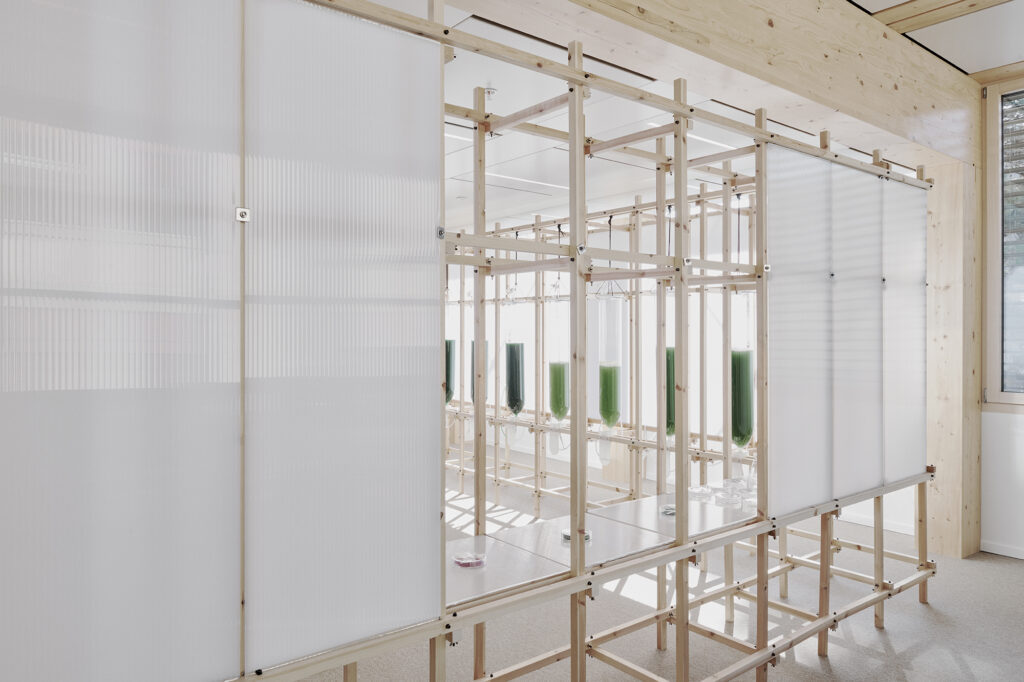
Cover image: ecoLogicStudio, AirBubble restorative space. Photography: Pepe Fotografia.